Startup Trained an AI Model in Space Using NVIDIA H100 GPU
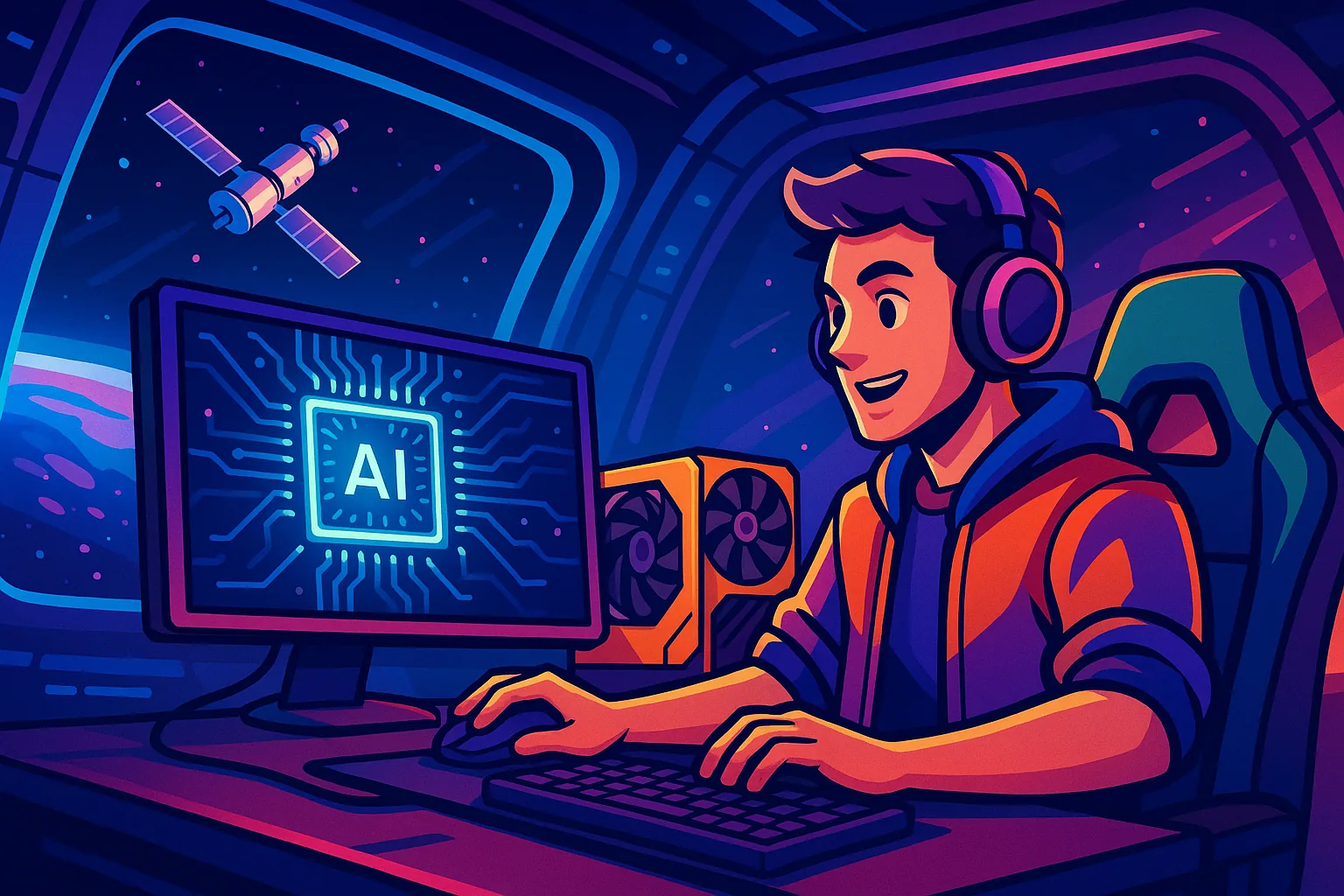
AI Goes to Space
While most of us are used to hearing about AI advancements happening in massive data centers on the ground, a startup called Starcloud just took things to a whole new level. Back in December 2025, they managed to train the first large language model ever created in orbit, floating about 500 kilometers above our planet.
What makes this particularly interesting for PC enthusiasts is the hardware they used: an NVIDIA H100 GPU. Yes, the same type of professional-grade chip that powers AI data centers here on Earth, now doing its job in the vacuum of space.
Why This Matters for Gaming and Hardware
You might be wondering what AI training in space has to do with gaming. The answer lies in the technology itself. The NVIDIA H100 is part of the same GPU family that has been pushing boundaries in both AI and gaming performance. While the H100 is specifically designed for data center and AI workloads (not something you’d drop into your gaming rig), it shares architectural DNA with consumer GPUs.
This achievement shows just how far GPU technology has come. These chips are now robust enough to handle not just your favorite games at high framerates, but also complex AI calculations in one of the harshest environments imaginable. The temperatures, radiation, and power constraints of space make it an incredibly challenging place to run any electronics, let alone train sophisticated AI models.
The Technical Challenge
Training a large language model requires enormous computing power and generates significant heat. On Earth, data centers solve this with massive cooling systems and stable power supplies. In orbit, everything changes. There’s no air for traditional cooling, power comes from solar panels, and cosmic radiation can interfere with sensitive electronics.
The fact that Starcloud pulled this off with hardware originally designed for terrestrial use speaks volumes about the reliability and efficiency of modern GPU architecture. It also opens up interesting possibilities for future space-based computing applications.
What This Means Going Forward
Space-based AI training might seem like science fiction, but it could have practical applications. Satellites generate massive amounts of data, and being able to process and learn from that data on-site, rather than beaming it all back to Earth, could be a game changer for everything from weather prediction to communications.
For the gaming and PC hardware community, this is another reminder of how intertwined gaming technology and cutting-edge computing have become. The same innovations that let us play games at higher resolutions and framerates are also enabling breakthroughs in AI, scientific research, and now orbital computing.
If you’re interested in keeping up with the latest hardware developments and how they impact gaming, our news section has regular updates on GPU releases, performance benchmarks, and tech innovations that actually matter to your gaming experience.
The line between gaming hardware and professional computing continues to blur, and achievements like this prove that the tech in our gaming PCs is truly world-class. Or should we say, out of this world? 🚀